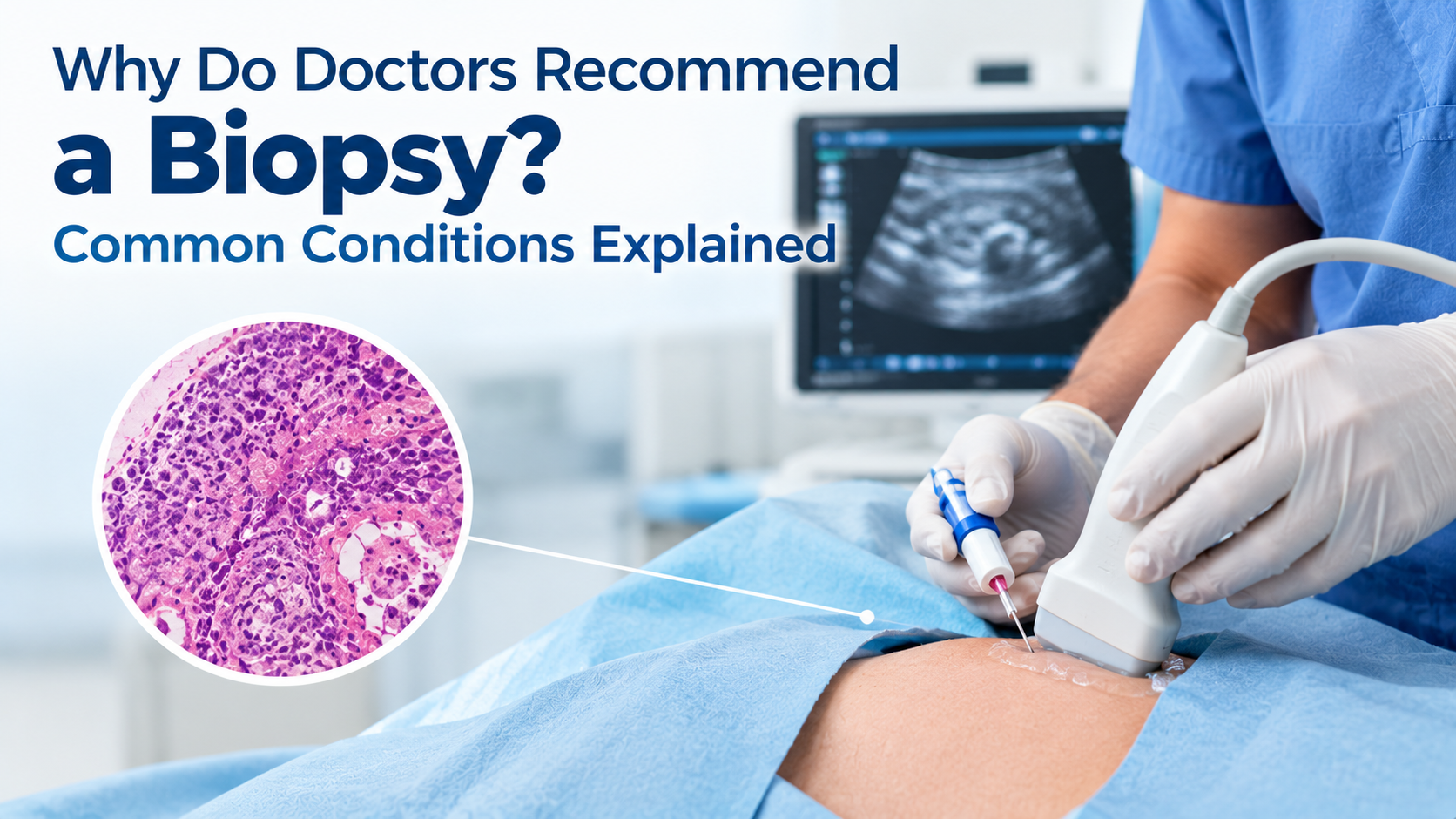
A medical diagnosis often requires more than a physical examination or routine imaging test. When a doctor identifies an unusual lump, swelling, tissue change, or abnormal finding on an ultrasound or scan, additional testing may be necessary to understand its cause. One of the diagnostic procedures used in these situations is a biopsy. It helps doctors examine a small sample of tissue or cells to identify changes that may not be fully explained by other tests.
A biopsy can be recommended for several reasons, including investigating suspicious growths, evaluating certain inflammatory conditions, identifying infections, and determining whether abnormal tissue contains cancerous cells. However, a biopsy does not automatically mean that a person has cancer. In many cases, the results help confirm a benign condition or guide further medical evaluation.
Understanding why doctors recommend a biopsy, how the procedure works, and what patients can expect can help reduce uncertainty and support informed healthcare decisions.
What Is a Biopsy?
A biopsy is a medical procedure in which a small sample of tissue or cells is collected from a particular area of the body for laboratory examination. A pathologist studies the sample under a microscope and may perform additional tests to identify abnormal cells, inflammation, infections, or other tissue changes.
Doctors may recommend a biopsy when a physical examination, blood test, ultrasound, CT scan, MRI, or other diagnostic investigation identifies an unexplained abnormality. The procedure helps provide more specific information about the condition being investigated.
The method used depends on the location, size, and nature of the abnormal area. Some biopsies involve inserting a thin needle into the tissue, while others require a small incision or the removal of a larger tissue sample.
Why Do Doctors Recommend a Biopsy?
A biopsy is recommended when examining tissue directly can help clarify a diagnosis or determine the most appropriate treatment. Imaging tests can reveal the location and appearance of an abnormality, but they may not always establish its exact nature.
Common reasons for recommending a biopsy include:
- Investigating a lump or swelling that has an uncertain cause.
- Evaluating tissue changes that appear suspicious on imaging.
- Confirming or ruling out certain cancers.
- Identifying inflammatory or autoimmune conditions.
- Investigating persistent skin lesions or unusual tissue growths.
- Diagnosing selected infections that affect body tissues.
- Determining the type or characteristics of an already identified disease.
- Helping doctors plan appropriate treatment and follow-up.
The decision to perform a biopsy depends on the patient’s symptoms, medical history, examination findings, and previous test results. Not every lump or abnormal scan requires a biopsy. A doctor assesses whether the procedure is necessary and whether another investigation may be more suitable.
Common Conditions That May Require a Biopsy
1. Suspicious Lumps and Abnormal Growths
A lump may develop in the breast, thyroid gland, lymph nodes, skin, or other parts of the body. Many lumps are benign, meaning they are not cancerous. However, some require further investigation because their appearance, growth pattern, or associated symptoms raise concerns.
A doctor may recommend imaging and, when indicated, a biopsy to determine the nature of the lump. For example, a breast lump may require a needle biopsy if clinical examination and imaging suggest that tissue analysis would help establish the diagnosis.
The results can help distinguish between benign growths, inflammatory changes, and malignant conditions. This information allows doctors to decide whether monitoring, medication, surgery, or another form of treatment is appropriate.
2. Thyroid Nodules and Goitre
The thyroid gland is located at the front of the neck and produces hormones that help regulate metabolism. When the gland becomes enlarged, the condition is known as goitre. Thyroid enlargement may occur because of iodine deficiency, autoimmune thyroid disease, thyroid nodules, or other underlying conditions.
Most cases of goitre are not caused by cancer. However, when a thyroid nodule has suspicious ultrasound features or meets other clinical criteria, a doctor may recommend a fine-needle aspiration biopsy to examine the cells.
Patients searching for a goitre doctor in Jaipur should understand that evaluation generally begins with a medical history, neck examination, thyroid function tests, and ultrasound when indicated. A biopsy is recommended only when the findings suggest that cellular examination could provide useful diagnostic information.
The results help guide further management, which may involve observation, medication for an associated thyroid disorder, additional testing, or surgery in selected cases.
3. Suspected Cancer
One of the best-known reasons for performing a biopsy is to investigate a possible cancer. Doctors may recommend the procedure when imaging or examination reveals an abnormal growth that cannot be confidently classified using other tests.
Depending on the suspected condition, tissue may be collected from the breast, lung, liver, lymph nodes, bone, skin, or another organ. A pathologist examines the sample to identify whether cancer cells are present and, when possible, determine the type of tumour.
A biopsy may also provide information about tumour characteristics that influence treatment decisions. However, the procedure is not necessary in every suspected cancer case. The appropriate diagnostic pathway depends on the suspected disease, the patient’s condition, and the available clinical evidence.
4. Persistent Skin Lesions
Changes in the skin can occur for many reasons, including infections, allergic reactions, inflammatory disorders, and abnormal cell growth. A lesion that does not heal, changes in appearance, bleeds repeatedly, or develops unusual characteristics may require further evaluation.
A skin biopsy involves removing a small sample of the affected area. The sample is then examined to identify the cause of the lesion.
Doctors may recommend this procedure when a skin condition remains unexplained despite initial treatment or when examination raises concerns about a potentially serious disorder. Early assessment can help establish the diagnosis and determine whether additional treatment is needed.
5. Liver, Kidney, and Other Organ Conditions
In certain situations, a biopsy helps doctors investigate diseases affecting internal organs. For example, a liver biopsy may be considered when selected liver conditions remain unclear after blood tests and imaging. A kidney biopsy may be recommended when unexplained changes in kidney function or urine findings suggest a disease that requires tissue examination.
These procedures are not routinely necessary for every patient with liver or kidney problems. Doctors consider whether the expected diagnostic benefit outweighs the possible risks, including bleeding and other procedure-related complications.
Different Types of Biopsy
The type of biopsy depends on the area being examined and the suspected condition.
Fine-needle aspiration biopsy: A thin needle is used to collect cells or fluid from an abnormal area. It is commonly used to evaluate selected thyroid nodules and other accessible lumps.
Core needle biopsy: A larger needle collects a small cylinder of tissue. This provides more tissue structure for laboratory examination and is used for several types of suspected abnormalities.
Incisional biopsy: A portion of an abnormal area is removed for testing when sampling the entire lesion is not appropriate.
Excisional biopsy: The entire suspicious lesion or lump is removed when clinically suitable.
Image-guided biopsy: Ultrasound, CT, or another imaging method helps guide the needle towards the targeted tissue, particularly when the abnormality is deep inside the body.
The doctor selects the method according to the location of the abnormality, the information required, and the patient’s overall health.
Is a Biopsy Painful or Risky?
The level of discomfort depends on the type of biopsy, the area being examined, and the technique used. Many needle biopsies are performed using local anaesthesia, which helps reduce pain. Patients may experience temporary tenderness, bruising, or mild swelling afterwards.
Like other medical procedures, a biopsy has potential risks. These may include bleeding, infection, discomfort, or, in some cases, injury to nearby structures. The likelihood of complications varies according to the biopsy site and the patient’s health.
Before the procedure, patients should inform their doctor about allergies, existing medical conditions, and medications, particularly blood-thinning medicines. They should not stop prescribed medication unless instructed by their healthcare professional.
Following the procedure, patients should seek medical advice if they develop increasing pain, persistent bleeding, fever, spreading redness, or other concerning symptoms.
How to Prepare for a Biopsy
Preparation depends on the procedure being performed. Some biopsies require very little preparation, while others may involve specific instructions.
Before the appointment, patients should:
- Share their medical history and current medication list.
- Inform the doctor about allergies and previous reactions to anaesthesia.
- Complete any recommended blood tests or imaging investigations.
- Follow instructions regarding food, fluids, or medication if provided.
- Ask whether someone should accompany them after the procedure.
- Understand the expected recovery period and any activity restrictions.
Patients should also ask when and how they will receive the results. Having clear information before the procedure can make the experience more manageable.
What Happens After a Biopsy?
After tissue collection, the sample is sent to a laboratory for examination. The time required to receive the results varies depending on the type of biopsy, the complexity of the sample, and whether additional testing is needed.
The doctor explains the findings in the context of the patient’s symptoms, examination, and imaging results. A benign result may mean that no immediate treatment is required, although some conditions need monitoring or medical care. An inconclusive result may require repeat sampling or another diagnostic test.
If the results identify a specific disease, the doctor discusses the available treatment options and whether a referral to another specialist is necessary.
Patients should attend their follow-up appointment even if the biopsy site heals without discomfort. The laboratory findings are an important part of completing the diagnostic process.
When Should You Consult a Doctor?
Medical evaluation is advisable when you notice a new or growing lump, unexplained swelling, a persistent skin lesion, an unusual thyroid enlargement, or an abnormality identified during imaging. Symptoms such as difficulty swallowing, unexplained changes in organ function, or persistent unexplained symptoms may also require assessment.
People experiencing symptoms associated with varicose veins, such as enlarged twisted veins, leg heaviness, aching, or swelling, should seek medical evaluation. Varicose veins are usually diagnosed through clinical examination and, when needed, a venous duplex ultrasound. A biopsy is not a routine test for ordinary varicose veins, although tissue sampling may occasionally be considered if a separate skin lesion or another unexplained abnormality requires investigation.
For patients who need tissue sampling, consulting a qualified biopsy doctor in Jaipur can help them understand the recommended procedure, its potential benefits and risks, and the next steps after diagnosis. The appropriate specialist depends on the location of the abnormality and the reason for the biopsy.
Frequently Asked Questions
1. Does needing a biopsy mean I have cancer?
No. A biopsy is used to investigate many conditions, including benign growths, inflammation, infections, and suspected cancer. The results help determine the actual cause of the abnormality.
2. How long does a biopsy procedure take?
Many needle biopsies take approximately 15–30 minutes, although preparation, observation, and more complex procedures can require additional time.
3. How long does it take to receive biopsy results?
Results may be available within a few days, but some samples require additional laboratory tests and take longer. Your doctor can provide an estimated timeline based on the procedure.
4. Is a biopsy always necessary for a thyroid nodule?
No. Some thyroid nodules can be monitored without a biopsy. The decision depends on the ultrasound appearance, size, clinical history, and other relevant findings.
5. Can a biopsy spread cancer?
The risk of tumour spread along a biopsy needle track is extremely low for most commonly performed biopsies. The benefits and potential risks are assessed before the procedure.
Conclusion
A biopsy is an important diagnostic tool that helps doctors investigate unexplained lumps, abnormal tissue changes, thyroid nodules, suspected cancers, and selected organ diseases. By examining tissue or cells directly, healthcare professionals can obtain information that supports an accurate diagnosis and appropriate treatment planning.
Although the word biopsy can cause anxiety, the recommendation does not automatically indicate a serious disease. Understanding why the procedure is advised, how it is performed, and what the results may mean can help patients approach the process with greater confidence. If a doctor identifies an abnormality that requires further investigation, following the recommended evaluation and attending follow-up appointments are important steps towards informed healthcare decisions.