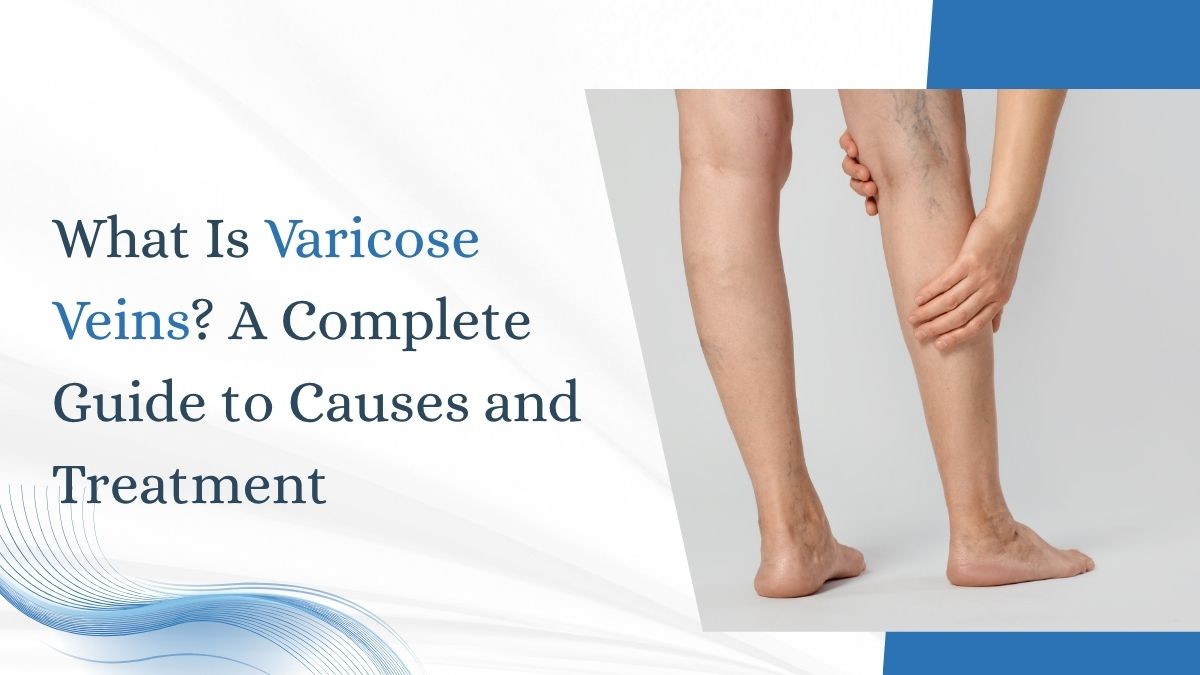
Varicose veins are enlarged, swollen, and twisted veins that commonly appear on the legs. They may look blue, purple, or darker than the surrounding skin and can sometimes become noticeable as raised or rope-like veins. For some people, varicose veins are mainly a cosmetic concern, while others may experience aching, heaviness, swelling, itching, or other symptoms.
Understanding why varicose veins develop, how they are diagnosed, and which treatment options are available can help you decide when to seek medical advice. If you notice persistent symptoms or changes in your legs, a healthcare professional can evaluate the condition and determine whether further investigation is needed.
What Are Varicose Veins?
Varicose veins develop when the valves inside the veins do not work properly. Normally, these valves help blood move upward toward the heart and prevent it from flowing backward. When the valves become weak or damaged, blood can collect inside the veins.
This increased pressure can cause the veins to become enlarged and twisted. Varicose veins most commonly affect the legs because the veins have to work against gravity to return blood to the heart.
Not every visible vein requires treatment. However, symptoms such as persistent pain, swelling, skin changes, or ulcers should be evaluated by a healthcare professional.
What Causes Varicose Veins?
The underlying problem is usually related to weakened vein walls or valves that allow blood to flow backward and collect in the veins. Several factors can increase the likelihood of developing varicose veins.
Common risk factors include:
- Increasing age
- Family history of varicose veins
- Pregnancy
- Being overweight
- Spending long periods sitting or standing
- Previous deep vein thrombosis
- Reduced movement or physical activity
These factors do not mean that someone will definitely develop varicose veins, but they can increase the risk.
What Are the Common Symptoms?
Some people with varicose veins have no symptoms other than visible changes in their legs. Others may experience discomfort that becomes more noticeable after prolonged standing or sitting.
Possible symptoms include:
- Enlarged, twisted or bulging veins
- Aching or heaviness in the legs
- Burning or throbbing sensations
- Muscle cramps
- Swelling around the lower legs or ankles
- Itching around affected veins
- Changes in skin colour or texture
Symptoms can vary from person to person. If symptoms are persistent or worsening, medical evaluation can help identify the underlying vein problem.
How Are Varicose Veins Diagnosed?
Diagnosis usually begins with a physical examination and discussion of symptoms and medical history. A healthcare professional may examine the legs while the patient is standing and look for swelling, enlarged veins, and changes in the skin.
A venous Doppler or duplex ultrasound may be recommended to assess blood flow through the veins. This non-invasive test uses sound waves to examine the veins and their valves and can help identify abnormal blood flow or other vein problems.
For this reason, imaging expertise can be an important part of the diagnostic process. Patients looking for the best Vascular Surgeon should consider factors such as relevant diagnostic experience, the availability of appropriate imaging facilities, and coordination with the treating specialist.
When Should You See a Doctor?
Not all varicose veins require immediate treatment. However, medical advice is appropriate when they are causing symptoms or becoming progressively more noticeable.
Consider consulting a healthcare professional if you experience:
- Persistent leg pain or heaviness
- Swelling in the legs or ankles
- Significant itching or skin changes
- A sore or ulcer that does not heal
- Varicose veins that are getting worse
- Bleeding from a varicose vein
Sudden or severe symptoms should receive prompt medical attention, particularly when there is concern about a blood clot or another circulation problem.
What Is Varicose Veins Treatment?
Treatment depends on the severity of the condition, symptoms, vein anatomy, test results, and the patient’s overall health. A healthcare professional may recommend lifestyle measures, compression therapy, a minimally invasive procedure, or surgery depending on the individual situation.
Treatment should not be selected simply because a particular procedure is popular. Proper assessment helps determine which approach is appropriate.
Lifestyle Measures
For mild symptoms, certain lifestyle measures may help improve comfort and circulation. Regular physical activity, maintaining a healthy weight, avoiding prolonged periods of sitting or standing, and elevating the legs when resting may be useful.
Walking is one form of regular activity that can support blood flow through the legs.
Compression Stockings
Compression stockings apply pressure to the legs and can help manage symptoms in some people. The appropriate type and compression level should be discussed with a healthcare professional, particularly if there are other circulation problems.
Compression therapy does not necessarily eliminate the underlying varicose veins, but it may help with symptoms such as swelling and discomfort.
Sclerotherapy
Sclerotherapy involves injecting a solution or foam into selected veins. The treatment causes the targeted vein to close, after which the body gradually processes it.
The procedure may be suitable for certain smaller varicose or spider veins, depending on the individual assessment. More than one treatment session may sometimes be needed.
Endovenous Laser or Radiofrequency Treatment
Catheter-based procedures can use laser or radiofrequency energy to close an affected vein. Ultrasound guidance may be used to position the catheter and monitor the procedure.
These minimally invasive approaches are commonly used for suitable larger veins and are generally performed as outpatient procedures.
Surgery
In selected cases, surgical procedures may be considered. Options can include ligation and vein stripping or removal of smaller superficial veins through ambulatory phlebectomy.
Whether surgery is appropriate depends on the patient’s vein condition and the findings from clinical assessment and imaging.
Finding a Varicose Veins Specialist in Jaipur
If you are experiencing persistent symptoms, seeking professional evaluation is more useful than relying only on the appearance of visible veins. A specialist can assess your symptoms, examine the affected area, and recommend appropriate diagnostic testing when necessary.
People searching online for the best Varicose Veins Doctor in Jaipur should look beyond promotional claims and consider the doctor’s relevant training, experience with venous conditions, diagnostic approach, treatment options offered, and whether the clinic provides appropriate follow-up care.
A proper diagnosis is especially important because different vein conditions can produce similar symptoms.
Understanding Varicose Veins Treatment in Jaipur
Patients considering Varicose Veins treatment in Jaipur may have access to different diagnostic and treatment approaches depending on the healthcare facility and individual clinical requirements.
The treatment pathway may begin with a clinical examination followed by duplex ultrasound when indicated. The results can help the treating specialist understand which veins are affected and whether abnormal blood flow or valve dysfunction is present.
Treatment should therefore be personalised rather than based solely on the visible appearance of the veins.
Can Varicose Veins Be Prevented?
There is no guaranteed way to prevent every case of varicose veins, particularly when factors such as age or family history are involved. However, maintaining regular physical activity, managing body weight, and avoiding long periods of sitting or standing may help support healthy circulation and reduce symptoms.
Taking short movement breaks during prolonged sitting or standing can also be helpful. Elevating the legs while resting may provide relief for some people.
Final Thoughts
Varicose veins are common and often develop because valves within the leg veins do not function properly, allowing blood to collect and increase pressure within the veins. While some cases cause little or no discomfort, others can lead to pain, swelling, skin changes, or complications.
Diagnosis may involve a physical examination and duplex ultrasound, while treatment can range from lifestyle measures and compression therapy to procedures such as sclerotherapy, endovenous ablation, or surgery. The appropriate approach depends on the individual’s condition and clinical findings.
If you have persistent symptoms or changes in your legs, consult a qualified healthcare professional for an appropriate evaluation rather than attempting to diagnose or treat the condition yourself.
FAQs
1. What are varicose veins?
Varicose veins are enlarged, swollen, and twisted veins, most commonly found in the legs. They can appear blue or purple and may sometimes cause aching, heaviness, swelling, itching, or discomfort.
2. What causes varicose veins?
Varicose veins commonly develop when the valves inside the veins become weak or damaged. This can allow blood to flow backward and collect in the veins, causing them to enlarge.
3. What are the common symptoms of varicose veins?
Common symptoms include visible enlarged veins, leg heaviness, aching, swelling around the ankles or lower legs, itching, muscle cramps, and changes in skin colour or texture.
4. When should I see a doctor for varicose veins?
You should consider medical evaluation if varicose veins cause persistent pain, swelling, skin changes, bleeding, ulcers, or symptoms that are getting worse.
5. How are varicose veins diagnosed?
A healthcare professional may perform a physical examination and recommend a venous Doppler or duplex ultrasound. This imaging test can help assess blood flow and the function of the veins and their valves.
6. What treatments are available for varicose veins?
Treatment depends on the individual’s condition. Options may include lifestyle measures, compression therapy, sclerotherapy, endovenous laser or radiofrequency treatment, and, in selected cases, surgery.