Biopsy in Jaipur
A biopsy is a procedure used to collect cells or tissue from a specific area of the body for laboratory examination. It may be recommended when a lump, nodule, lesion or abnormal imaging finding needs further evaluation.
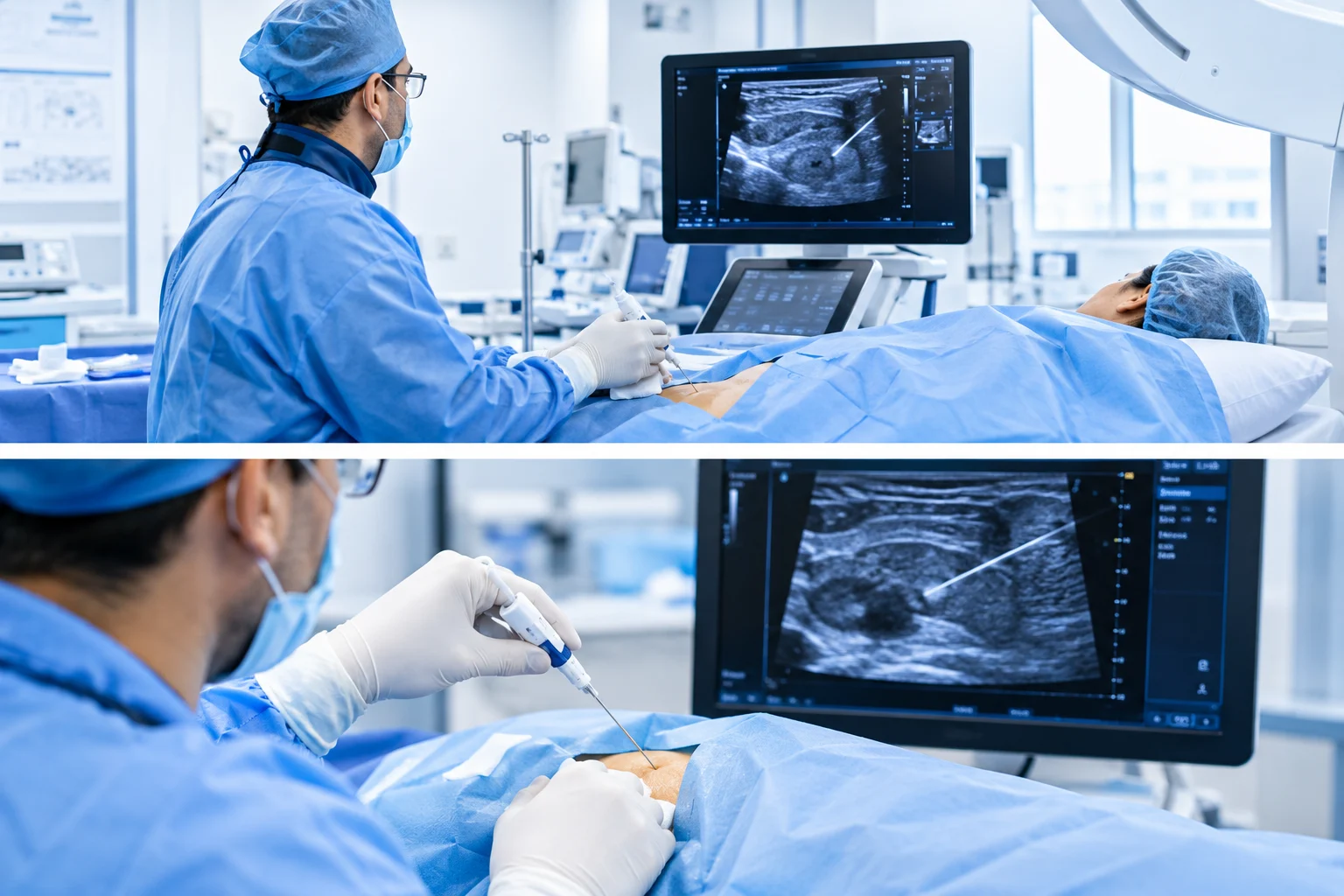
What Is a Biopsy?
A biopsy is a medical procedure in which a small sample of cells or tissue is collected from a particular area of the body and examined in a pathology laboratory.
Depending on the clinical situation, the sample may be collected using a needle-based technique or another appropriate approach. Imaging may also be used to help identify and target the area being sampled.
Why Is a Biopsy Recommended?
A doctor may recommend a biopsy when examination, imaging or other investigations identify an area that requires further evaluation.
- Lump or swelling requiring evaluation
- Suspicious nodule or lesion
- Abnormal ultrasound or imaging finding
- Unexplained tissue changes
- Need for cellular or tissue examination
- Additional information for treatment planning
Who May Need a Biopsy?
A biopsy is not required for every lump or abnormal scan. The decision depends on the patient's symptoms, examination, imaging findings and overall clinical situation.
Abnormal Imaging Finding
Further evaluation may be considered when imaging shows an area that requires tissue or cellular assessment.
Lump or Nodule
Some lumps or nodules may require sampling when clinical examination or imaging cannot provide enough information.
Suspicious Lesion
A doctor may recommend tissue sampling when a lesion needs further pathological evaluation.
Types of Biopsy & Tissue Sampling
The appropriate technique depends on the target area, clinical requirement, imaging findings and individual patient factors.
Radiobiopsy
Image-guided tissue sampling may be used to obtain a sample from a selected abnormal area for pathology evaluation.
FNAC
Fine Needle Aspiration Cytology uses a fine needle to collect cells from a selected lump or lesion for cytological examination.
USG-Guided Biopsy
Ultrasound guidance can assist in identifying the target and guiding the needle during selected procedures.
Liver Biopsy
A liver biopsy involves obtaining a small sample of liver tissue for pathological examination when clinically indicated.
Transjugular Liver Biopsy
A transjugular approach allows liver tissue to be obtained through the jugular venous route in selected cases.
Image-Guided Sampling
Imaging may be used during selected procedures to help target the intended area according to the patient's clinical requirements.
FNAC vs Biopsy: What Is the Difference?
FNAC and biopsy are different sampling approaches. The appropriate option depends on what information is required and the clinical characteristics of the area being evaluated.
| Aspect | FNAC | Biopsy |
|---|---|---|
| Sample | Cells are collected. | A tissue sample may be collected. |
| Examination | Cytological examination. | Histopathological/tissue examination when applicable. |
| Needle | Usually uses a fine needle. | The sampling device depends on the procedure. |
| Purpose | Provides cellular information. | Provides tissue information for selected diagnostic questions. |
| Selection | The doctor decides the appropriate approach based on the clinical condition, target area and information required. | |
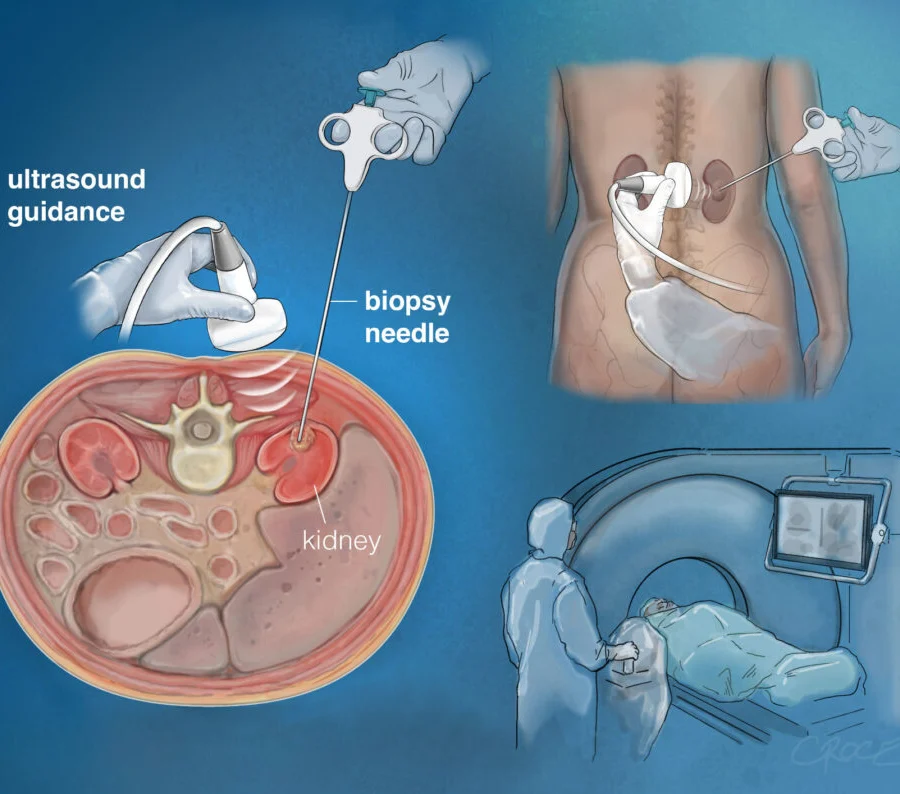
How Does Image-Guided Biopsy Help?
Image guidance can help the interventional radiologist identify the intended target and plan needle positioning according to the patient's anatomy and clinical condition.
Depending on the procedure, ultrasound or another appropriate imaging method may be used to assist the sampling process.
Liver Biopsy & Transjugular Liver Biopsy
Liver biopsy procedures may be considered when liver tissue needs to be examined. The appropriate route is selected according to the patient's clinical situation.
Liver Biopsy
A liver biopsy involves obtaining a small tissue sample from the liver for examination in a pathology laboratory.
The procedure and preparation are planned according to the patient's medical history, liver condition and clinical requirement.
Transjugular Liver Biopsy
In a transjugular liver biopsy, a catheter is introduced through the jugular vein to access the liver and obtain a tissue sample.
Whether this approach is appropriate depends on the individual clinical situation and the treating doctor's assessment.
When Is a Biopsy Recommended?
A biopsy may be advised when additional cellular or tissue information is needed after clinical examination, imaging or other investigations.
Lump or Swelling
A doctor may recommend sampling when a lump requires further evaluation.
Nodule
Certain nodules may require cellular or tissue examination depending on their clinical and imaging features.
Suspicious Lesion
A biopsy can provide additional information when a lesion requires pathological assessment.
How Is a Biopsy Performed?
The exact procedure varies according to the biopsy site, technique and patient's individual medical condition.
Consultation
Medical history and available reports are reviewed.
Imaging Review
Relevant imaging may be assessed to identify the target.
Preparation
Procedure-specific preparation is explained.
Consent
The procedure and relevant risks are discussed.
Sample Collection
Cells or tissue are collected using the selected approach.
Pathology
The sample is sent for laboratory examination.
Preparation Before Biopsy
Preparation is procedure-specific. Follow the instructions provided by your medical team rather than assuming that the same preparation applies to every biopsy.
Medicines
Inform the doctor about all prescription medicines, over-the-counter medicines and supplements you take. Do not stop prescribed medicines unless advised.
Blood Tests
Depending on the procedure and your medical history, blood investigations may be advised before biopsy.
Fasting
Fasting is not required for every biopsy. If it is required for your procedure, you will receive specific instructions.
Medical History
Tell the medical team about allergies, previous procedures, medical conditions and any relevant treatment history.
What Should You Bring to Your Biopsy Consultation?
Bringing relevant medical records can help the doctor review your clinical history and previous investigations.
What Happens After a Biopsy?
Once the sample is collected, it is sent to a pathology laboratory for examination. The laboratory process depends on the type of sample and the examination required.
The pathology findings are then considered along with symptoms, clinical examination and imaging findings.
Recovery & Aftercare
- Keep the procedure site clean as instructed.
- Follow dressing instructions provided by the medical team.
- Mild pain, tenderness or bruising may occur in some cases.
- Follow any activity restrictions given to you.
- Take medicines according to medical instructions.
- Contact your healthcare team if concerning symptoms develop.
What Does a Biopsy Report Tell You?
A biopsy report describes the findings identified during pathological examination of the collected cells or tissue. The exact information depends on the type of sample and laboratory examination performed.
Risks & Possible Complications
As with other medical procedures, biopsy can have risks. The risks depend on the biopsy type, location and individual patient factors.
- Pain or temporary discomfort
- Bruising or swelling
- Bleeding
- Infection
- Procedure-specific complications
Your doctor will explain the relevant risks and precautions for your particular procedure.
Benefits of Image-Guided Biopsy
- Helps target a specific abnormal area
- Imaging can support needle positioning
- Many procedures use a minimally invasive approach
- Provides cells or tissue for pathology
- Can support further clinical decision-making
Biopsy vs Surgery: Are They the Same?
No. A biopsy is primarily performed to obtain cells or tissue for diagnostic evaluation. Surgery is a different medical approach that may be used for treatment or for other clinical purposes.
Purpose of Biopsy
To obtain a sample for pathological or cytological examination when additional diagnostic information is needed.
Purpose of Surgery
Surgery may be performed for treatment or other medical reasons. Whether surgery is required depends on the diagnosis and treatment plan.
Clinical Decision
The appropriate approach is decided after considering the patient's symptoms, examination, imaging and other available information.

Dr. Ankit Singhvi
Dr. Ankit Singhvi is a Neuro and Vascular Interventional Radiologist providing interventional radiology services in Jaipur.
Dr. Ankit Singhvi completed his MBBS from Mahatma Gandhi Medical College & Hospital and DNB Radiology (3 years) from Apollo Hospital International Limited, Ahmedabad.
He further completed his Super-Specialisation in Onco-Intervention from Tata Memorial Hospital, Mumbai.
His professional experience includes neurovascular, vascular and interventional radiology procedures, with experience in minimally invasive and image-guided interventions.
Biopsy Evaluation with Interventional Radiology Expertise
Interventional radiology combines imaging expertise with minimally invasive procedures. In selected biopsy cases, imaging can help with procedure planning and tissue sampling.
Imaging Expertise
Imaging findings can help identify the location and characteristics of the area requiring evaluation.
Minimally Invasive Approach
Many biopsy procedures use a needle-based approach rather than a larger surgical incision.
Individualised Planning
The appropriate technique is selected according to the clinical condition, target area and available imaging.
Hospital & Location
Consultation and interventional radiology services are associated with CK Birla Hospitals || RBH, Jaipur.
B-15, LANE 3, CK BIRLA HOSPITAL,
Gopalpura Bypass Rd, near TREVENI,
Vishveshvariya Nagar, FLYOVER,
Jaipur, Rajasthan 302018
Need a Biopsy Evaluation?
If your doctor has advised a biopsy or you have an abnormal imaging finding that requires further evaluation, you can discuss your reports and suitable procedure options during consultation.
Biopsy FAQs
Common questions about biopsy procedures, preparation, recovery and pathology.
A biopsy is a procedure in which cells or tissue are collected from a selected area and examined in a pathology laboratory.
No. A biopsy does not necessarily mean cancer. It may be recommended for many types of abnormal findings when cellular or tissue examination is required.
A biopsy may be recommended when a lump, nodule, suspicious lesion or abnormal imaging finding requires additional cellular or tissue evaluation.
FNAC generally collects cells using a fine needle for cytological examination, whereas a biopsy may collect tissue for pathological examination. The appropriate method depends on the clinical situation.
An image-guided biopsy uses appropriate imaging to help identify and target the area from which a sample needs to be collected.
Not every biopsy requires fasting. If fasting is required for your particular procedure, the medical team will provide specific instructions.
Some medicines may require special consideration before certain procedures. Do not stop prescribed medicines on your own. Inform your doctor about all medicines and supplements you take.
The amount of discomfort varies according to the type and location of the biopsy. The medical team may use appropriate measures to reduce discomfort depending on the procedure.
Recovery varies according to the biopsy type, location and individual patient factors. Specific aftercare instructions will be provided after the procedure.
Reporting time varies according to the type of sample and laboratory examination required. The healthcare team can provide a more specific timeframe for your individual procedure.
Bring relevant previous reports, ultrasound, CT or MRI studies, blood investigations, current medication details and previous treatment records when available.
The sample is sent to a pathology laboratory for examination. The resulting report is interpreted together with your clinical history and imaging to determine the appropriate next step.
Consult Dr. Ankit Singhvi for Biopsy Evaluation in Jaipur
Discuss your reports, biopsy requirement and suitable image-guided procedure options with an experienced Neuro and Vascular Interventional Radiologist.
Call +91-9601324288Medical Information: The information on this page is intended for general patient education and does not replace a medical consultation. The exact biopsy technique, preparation, medicines, anaesthesia or sedation, risks, recovery and follow-up may vary according to the procedure and individual patient condition. Your doctor will determine the appropriate approach after clinical evaluation.