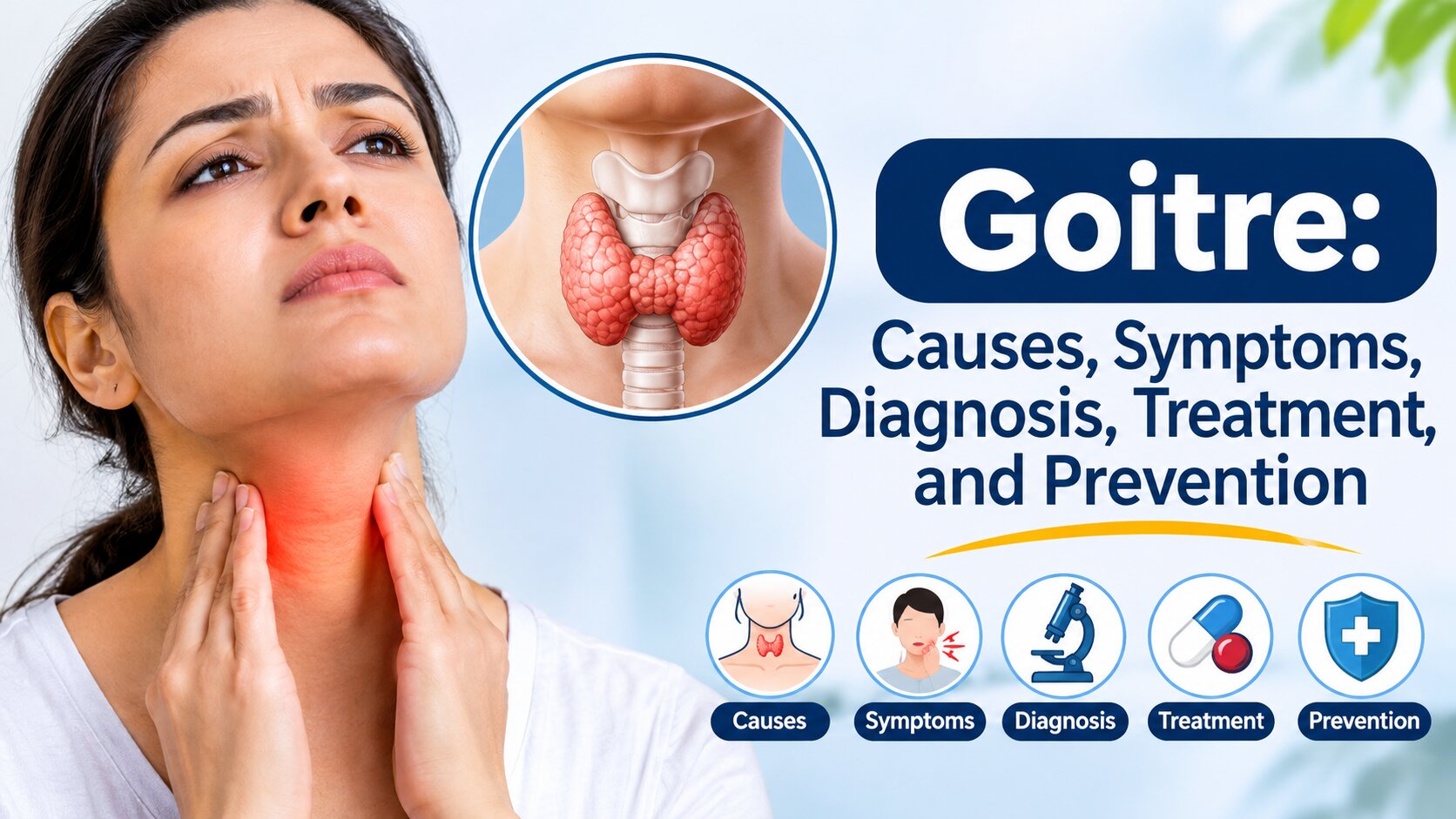
The thyroid gland is an important part of the endocrine system. It produces hormones that help regulate metabolism, body temperature, heart rate, energy levels, and several other body functions. When the thyroid gland becomes enlarged, the condition is known as goitre. It may develop due to different thyroid-related conditions, nutritional deficiencies, or changes in hormone production.
Goitre can affect people of different age groups and may occur with normal, increased, or decreased thyroid hormone levels. Some individuals may not experience noticeable symptoms, while others may develop swelling in the neck, difficulty swallowing, breathing discomfort, or voice changes. Early medical evaluation helps identify the underlying cause and determine whether treatment is necessary.
Understanding the causes, symptoms, diagnostic methods, and available treatment options can help individuals take appropriate steps towards better thyroid health.
What Is Goitre?
Goitre refers to an abnormal enlargement of the thyroid gland, which is located at the front of the neck, just below the Adam’s apple. The enlargement may affect the entire gland or develop in the form of one or more nodules.
Goitre is not necessarily a sign of cancer. Many cases are associated with non-cancerous thyroid conditions, iodine deficiency, or hormonal changes. However, an enlarged thyroid should be evaluated by a healthcare professional to determine its cause.
Depending on the thyroid’s hormone production, goitre may be associated with:
- Normal thyroid function: The gland is enlarged, but hormone levels remain within the normal range.
- Hypothyroidism: The thyroid produces insufficient hormones.
- Hyperthyroidism: The thyroid produces excessive hormones.
Treatment depends on the underlying condition, the size of the gland, and the symptoms experienced by the patient.
What Are the Common Causes of Goitre?
Several factors can contribute to thyroid enlargement. Identifying the underlying cause is important for selecting an appropriate treatment approach.
1. Iodine Deficiency
Iodine is an essential mineral required for thyroid hormone production. When the body does not receive sufficient iodine, the thyroid gland may enlarge as it attempts to maintain adequate hormone production.
Using iodised salt and maintaining a balanced diet can help prevent iodine deficiency in many individuals.
2. Hashimoto’s Thyroiditis
Hashimoto’s thyroiditis is an autoimmune condition in which the immune system mistakenly attacks the thyroid gland. This may cause inflammation and gradual damage to thyroid tissue, sometimes resulting in an enlarged thyroid and hypothyroidism.
3. Graves’ Disease
Graves’ disease is another autoimmune condition that can cause the thyroid gland to become overactive. It may lead to diffuse thyroid enlargement along with symptoms such as rapid heartbeat, weight loss, sweating, and nervousness.
4. Thyroid Nodules
Thyroid nodules are lumps that develop within the thyroid gland. They may be solid, fluid-filled, or a combination of both. Most thyroid nodules are non-cancerous, but some require further investigation to rule out serious conditions.
5. Thyroid Inflammation
Inflammation of the thyroid gland, also known as thyroiditis, may cause temporary or persistent enlargement. Depending on its type, thyroiditis can affect hormone production and cause discomfort in the neck.
6. Hormonal Changes and Other Factors
Pregnancy, certain medications, family history, and some medical conditions may also influence thyroid size and function.
What Are the Symptoms of Goitre?
The symptoms of goitre vary depending on the size of the enlarged gland and the underlying thyroid condition. Small goitres may not cause noticeable problems and may only be identified during a routine examination.
Common symptoms include:
- Visible swelling or a lump at the front of the neck.
- A feeling of tightness around the throat.
- Difficulty swallowing food or liquids.
- Breathing discomfort, particularly when lying down.
- Persistent coughing without an obvious cause.
- Hoarseness or changes in voice.
- Discomfort in the neck area.
If goitre is associated with an overactive thyroid, symptoms may include excessive sweating, weight loss, anxiety, and a rapid heartbeat. An underactive thyroid may cause tiredness, weight gain, dry skin, and sensitivity to cold.
Anyone experiencing persistent neck swelling, difficulty breathing, or swallowing problems should seek medical evaluation.
How Is Goitre Diagnosed?
Diagnosis involves assessing the thyroid gland, checking hormone levels, and identifying the reason for enlargement. The doctor may recommend one or more of the following investigations.
1. Physical Examination
The doctor examines the neck to assess the thyroid gland’s size, shape, tenderness, and any noticeable nodules. Medical history and associated symptoms are also reviewed.
2. Thyroid Function Tests
Blood tests help evaluate thyroid hormone levels. Common investigations include:
- TSH (Thyroid-Stimulating Hormone).
- T3 (Triiodothyronine).
- T4 (Thyroxine).
These tests help determine whether the thyroid is functioning normally, producing insufficient hormones, or producing excessive hormones.
3. Thyroid Ultrasound
Ultrasound uses sound waves to create images of the thyroid gland. It helps identify enlargement, nodules, cysts, and changes in thyroid tissue. It is a commonly used investigation because it does not involve radiation.
4. Fine Needle Aspiration Biopsy
If a thyroid nodule has suspicious ultrasound features or meets certain size criteria, the doctor may recommend fine needle aspiration (FNA). A thin needle is used to collect a small sample of cells for laboratory examination.
Patients searching for a biopsy doctor in jaipur should consider a qualified specialist experienced in image-guided biopsy procedures. Not every goitre requires a biopsy; the decision depends on the nodule’s appearance, size, and clinical findings.
5. Thyroid Scan
In selected cases, a thyroid scan may be recommended to evaluate how different parts of the gland function. It can help identify areas of increased or reduced thyroid activity.
What Are the Treatment Options for Goitre?
Treatment depends on the cause, symptoms, thyroid hormone levels, and whether nodules are present. Not every patient requires immediate treatment.
1. Regular Monitoring
Small goitres that do not cause symptoms and have reassuring investigation results may only require periodic medical monitoring. Follow-up appointments and repeat ultrasound or blood tests may be advised.
2. Medication
If goitre is associated with hypothyroidism, thyroid hormone replacement medication may be prescribed. Patients with hyperthyroidism may require medicines that reduce thyroid hormone production or other appropriate treatment.
Medication should always be taken according to medical advice.
3. Radioactive Iodine Treatment
Radioactive iodine may be recommended in selected patients with an overactive thyroid or certain types of goitre. It is taken orally and is absorbed by thyroid cells, helping reduce their activity and sometimes the size of the gland.
It is not suitable for everyone, and pregnancy-related precautions are important.
4. Surgery
Surgery may be considered when goitre causes significant breathing or swallowing difficulties, has suspicious findings, continues to enlarge, or is associated with certain thyroid conditions.
The extent of surgery depends on the patient’s diagnosis and medical requirements. A specialist discusses the possible benefits, risks, and long-term thyroid hormone needs before treatment.
How to Choose the Right Goitre Specialist?
Selecting an experienced healthcare professional is important for accurate diagnosis and appropriate treatment. Patients looking for the best goitre doctor in jaipur should consider the doctor’s experience in thyroid disorders, diagnostic approach, available investigations, and ability to explain treatment options clearly.
Depending on the condition, evaluation may involve an endocrinologist, an ENT specialist, a thyroid surgeon, or another qualified doctor. An interventional radiologist may also be involved when an image-guided biopsy is required.
It is equally important to understand that specialists have different areas of expertise. For example, a best varicose veins doctor in Jaipur generally focuses on diagnosing and treating vein-related conditions, which is different from managing thyroid enlargement.
Patients should discuss their symptoms, investigation reports, medical history, and treatment expectations before deciding on a care plan.
Can Goitre Be Prevented?
Not all types of goitre can be prevented, especially those caused by autoimmune conditions or genetic factors. However, certain measures can support thyroid health:
- Use iodised salt in appropriate quantities to help maintain iodine intake.
- Follow a balanced diet containing essential nutrients.
- Avoid taking iodine supplements without medical advice.
- Get thyroid function checked when recommended by a healthcare professional.
- Seek evaluation for persistent neck swelling or thyroid-related symptoms.
- Follow medical advice for existing thyroid conditions.
People with a family history of thyroid disorders may benefit from discussing appropriate screening with their doctor.
Conclusion
Goitre is an enlargement of the thyroid gland that may develop due to iodine deficiency, autoimmune conditions, thyroid nodules, or other medical factors. Although many cases are not serious, persistent enlargement should be evaluated to identify the underlying cause.
Blood tests, ultrasound, and selected biopsy procedures help doctors assess thyroid health and decide whether monitoring, medication, radioactive iodine, or surgery is appropriate. Early diagnosis and individualised medical care can help manage symptoms and prevent complications.
Consulting a qualified healthcare professional is important whenever unusual neck swelling, swallowing difficulties, or other thyroid-related symptoms occur.
Frequently Asked Questions (FAQs)
1. What is the main cause of goitre?
Goitre can develop due to iodine deficiency, autoimmune thyroid conditions, thyroid nodules, inflammation, or hormonal changes. The exact cause varies between individuals.
2. Is goitre a serious condition?
Not always. Many goitres are non-cancerous and may not require treatment. However, some can cause pressure symptoms or indicate an underlying thyroid disorder that needs medical attention.
3. Can goitre go away without treatment?
Some cases may remain stable or improve depending on the cause. Others require medication or additional treatment. Medical evaluation helps determine the appropriate approach.
4. Does every goitre require surgery?
No. Surgery is generally considered when the enlargement causes significant symptoms, has suspicious findings, or requires treatment that cannot be managed through other options.
5. Can goitre affect breathing and swallowing?
Yes. A significantly enlarged thyroid may press against nearby structures in the neck, causing difficulty swallowing or breathing.