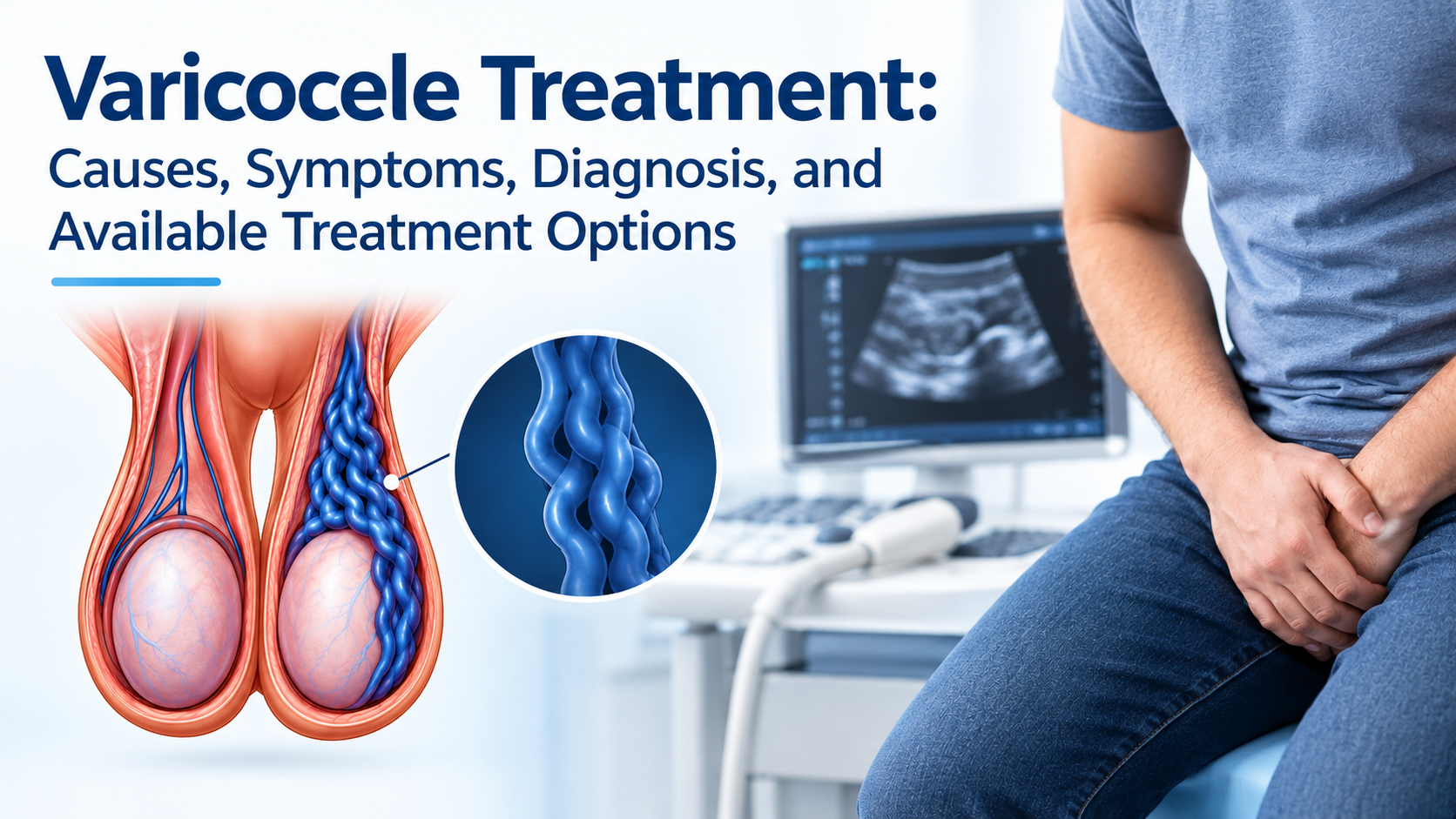
Varicocele is a common condition affecting the veins inside the scrotum, the skin-covered pouch that holds the testicles. It develops when veins responsible for carrying blood away from the testicles become enlarged, allowing blood to collect in the affected area. Although some men experience no symptoms, others may notice discomfort, swelling, or changes in testicular size. In certain cases, varicocele can also affect sperm production and male fertility.
Understanding the causes, symptoms, and available treatment options can help men make informed decisions about their reproductive health. The appropriate treatment depends on the severity of the condition, the symptoms experienced, testicular development, and whether fertility is a concern. Men seeking varicocele treatment in jaipur should consult a qualified healthcare professional for an appropriate evaluation and an individualized treatment plan.
What Is Varicocele?
A varicocele is an enlargement of the veins within the scrotum, particularly the pampiniform plexus, a network of veins that helps regulate testicular temperature. These veins contain valves that assist blood flow toward the heart. When the valves do not function properly, blood may flow backward and accumulate in the veins, causing them to enlarge.
Varicocele most commonly develops on the left side of the scrotum, although it can affect both sides. It often appears during adolescence or early adulthood and may remain unnoticed for years.
Not every varicocele requires treatment. However, medical assessment is important when it causes persistent pain, testicular growth differences, or fertility-related concerns.
What Causes Varicocele?
The exact reason why a varicocele develops is not always clear. However, several factors contribute to the condition.
1. Improper functioning of vein valves
The valves inside the scrotal veins help maintain the normal direction of blood flow. When these valves become ineffective, blood can flow backward and collect in the veins, leading to enlargement.
2. Increased pressure within the veins
Differences in the anatomy of the veins, particularly on the left side, can contribute to increased venous pressure. This helps explain why left-sided varicoceles are more common.
3. Changes during adolescence
During puberty, testicular growth and increased blood flow can make an existing vein abnormality more noticeable. Some varicoceles develop during this period and remain stable over time.
4. Underlying medical conditions
In uncommon cases, a varicocele that develops suddenly, particularly on the right side or without improving when lying down, may require further investigation to exclude an underlying cause affecting blood flow.
Common Symptoms of Varicocele
Many men with varicocele do not experience noticeable symptoms. When symptoms occur, they may include:
- A dull ache or discomfort in the scrotum.
- Pain that becomes more noticeable after standing for a long time or exercising.
- Relief from discomfort when lying down.
- Enlarged or twisted veins that may feel like a soft bundle under the scrotal skin.
- A difference in testicular size.
- Difficulty conceiving in some cases.
Pain associated with varicocele is often mild, but persistent discomfort should not be ignored. Sudden, severe testicular pain requires urgent medical attention because it may indicate a different condition, such as testicular torsion.
How Is Varicocele Diagnosed?
An accurate diagnosis helps determine whether treatment is necessary. A healthcare professional may recommend the following assessments.
1. Physical Examination
The doctor examines the scrotum, sometimes while the patient is standing and performing a Valsalva manoeuvre, which involves gently straining as if having a bowel movement. This can make enlarged veins easier to detect.
2. Scrotal Ultrasound
A scrotal ultrasound uses sound waves to examine the testicles and surrounding structures. Doppler ultrasound can assess blood flow and help identify backward blood flow through enlarged veins. It is particularly useful when the physical examination is inconclusive or another condition needs to be excluded.
3. Fertility Assessment
When infertility is a concern, the doctor may recommend semen analysis to evaluate sperm count, movement, and shape. Hormone testing may be appropriate in selected cases.
A biopsy is not routinely required to diagnose varicocele. It may be considered only in specific circumstances involving a separate medical concern, based on specialist advice.
Available Varicocele Treatment Options
The right treatment depends on symptoms, examination findings, testicular health, and fertility goals. Some men need only observation, while others may benefit from a procedure.
1. Observation and Regular Monitoring
A varicocele without significant symptoms or fertility-related concerns may not require immediate treatment. The doctor may recommend periodic examinations to monitor testicular size, symptoms, and any changes in reproductive health.
Monitoring is particularly relevant when the varicocele is small and does not affect daily activities.
2. Lifestyle Measures and Pain Management
For mild discomfort, conservative measures may provide relief. These can include:
- Wearing supportive underwear.
- Avoiding activities that consistently aggravate discomfort.
- Taking breaks from prolonged standing when possible.
- Using a wrapped cold pack briefly to relieve discomfort, without applying ice directly to the skin.
- Using pain-relief medication only when appropriate and after checking with a healthcare professional.
These measures may help manage symptoms, but they do not repair the affected veins or eliminate the underlying reflux.
3. Varicocele Surgery (Varicocelectomy)
Varicocelectomy is a surgical procedure that closes or ties off the affected veins so blood can be redirected through healthier veins. It may be recommended when a varicocele causes persistent pain despite conservative care, affects testicular development, or is associated with selected cases of male infertility.
Microsurgical varicocelectomy uses magnification to help the surgeon identify and preserve important structures, including arteries and lymphatic vessels. Other surgical approaches may also be suitable depending on the patient’s condition and the surgeon’s assessment.
Recovery varies according to the procedure and individual circumstances. Patients should follow postoperative instructions and attend follow-up appointments to monitor healing and symptom improvement.
4. Percutaneous Embolization
Embolization is a minimally invasive alternative to surgery. An interventional radiologist inserts a thin catheter into a vein, usually through a small access site in the groin or neck, and guides it toward the affected veins. Small coils or another appropriate embolic material are used to block abnormal blood flow.
This procedure may be suitable for selected patients and can sometimes be considered when a varicocele returns after surgery. Availability and suitability depend on the patient’s anatomy and the expertise of the treating team.
Can Varicocele Affect Male Fertility?
Varicocele is associated with male infertility in some men, but having the condition does not automatically mean a person will have difficulty fathering a child.
The condition may increase the temperature around the testicles and contribute to oxidative stress, potentially affecting sperm production, movement, or quality. However, these effects vary considerably between individuals.
Treatment may improve semen parameters in appropriately selected men, and some couples may experience improved chances of pregnancy. Results are not guaranteed, and the benefits depend on several factors, including the severity of the varicocele and the reproductive health of both partners.
Men concerned about fertility should discuss semen analysis and appropriate investigations with a qualified specialist before deciding on treatment.
Varicocele vs. Varicose Veins: What Is the Difference?
Varicocele and varicose veins both involve enlarged veins and problems with blood circulation, but they affect different parts of the body.
Varicocele occurs in the veins surrounding the testicles, whereas varicose veins commonly develop in the legs. Both conditions can involve ineffective vein valves and backward blood flow. However, their symptoms, diagnostic methods, and treatment approaches differ.
Treatments used for leg varicose veins should not automatically be considered suitable for varicocele. Each condition requires an appropriate medical evaluation.
When Should You Consult a Doctor?
Consider arranging a medical consultation if you notice persistent scrotal discomfort, enlarged veins, a change in testicular size, or difficulty conceiving. An examination can help establish whether a varicocele is present and whether treatment is needed.
Seek urgent medical attention for sudden or severe testicular pain, especially when accompanied by swelling, nausea, or vomiting. These symptoms can indicate a medical emergency unrelated to an ordinary varicocele.
If you are considering varicocele treatment in jaipur, discuss the available options, expected benefits, potential risks, and recovery requirements with a qualified specialist before making a decision.
Frequently Asked Questions
1. Can varicocele go away without treatment?
A varicocele usually does not disappear on its own. Mild cases may remain stable and may not need treatment if they cause no significant symptoms or complications.
2. Is varicocele treatment always necessary?
No. Treatment is generally considered when there is persistent pain, impaired testicular development, or a relevant fertility concern. The decision depends on individual clinical findings.
3. Does varicocele surgery improve fertility?
Surgery may improve semen quality in selected men with a clinically significant varicocele and infertility. However, improvement in fertility or pregnancy rates is not guaranteed.
4. How long does recovery from varicocele treatment take?
Recovery depends on the procedure and individual health. Many patients return to light activities within a few days, but strenuous exercise and heavy lifting may need to be avoided for longer, according to the treating clinician’s instructions.
5. Is varicocele the same as varicose veins?
No. Both involve enlarged veins, but varicocele affects the veins around the testicles, while varicose veins usually affect the legs. They require different assessments and treatment plans.
Conclusion
Varicocele is a common venous condition that may cause scrotal discomfort, testicular changes, or fertility-related concerns in some men. Diagnosis generally involves a physical examination and, when appropriate, Doppler ultrasound and fertility testing. Depending on the findings, management may include observation, symptom relief, surgery, or embolization.
Early evaluation can help identify men who may benefit from treatment while avoiding unnecessary procedures in those who do not need them. A qualified healthcare professional can explain the available options and recommend an approach based on symptoms, testicular health, and personal fertility goals.